Foxlove: When a Script Font Wants to Be Your Brand Signature
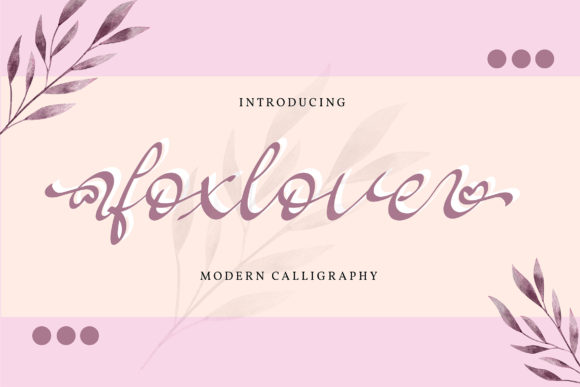
When you’re scrolling through a catalog of script fonts, you’re looking for a voice. A typeface that isn’t just pretty, but has a character you can trust with your brand’s name. Foxlove caught my eye not for being the loudest, but for being the one with the most confident whisper. My first impression wasn’t of a frilly, over-decorated script, but of a modern typography with a grounded, almost serene personality. The letters feel deliberate—each stroke has a clear beginning and end, with a flow that’s elegant without being fragile. It creates a mood of thoughtful creativity, a blend of warmth and professionalism.
The Practical Charm: Where Foxlove Finds Its Home
In real project work, Foxlove proves itself not as a novelty, but as a versatile design asset. I’ve tested it across the board, from initial sketches to final mockups. For logo design, especially for brands in lifestyle, artisan goods, or personal services, Foxlove offers a distinct yet legible mark. It doesn’t dissolve into a blur when you step back; it holds its form. In packaging design and product labels, it brings that premium, hand-crafted sensibility without looking literally handwritten. It feels designed, which is crucial for building audience trust and recognition.
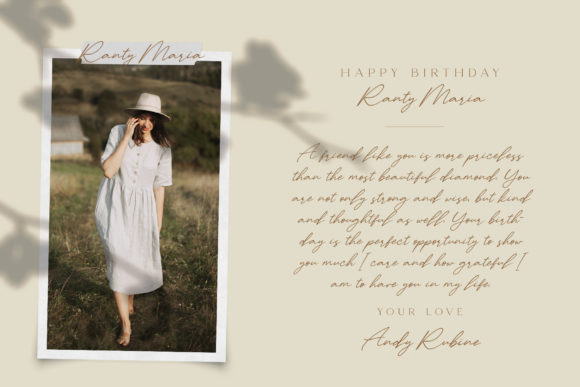
Its strength shines in editorial design for quotes and pull-out text, in website headers for boutique stores or creative portfolios, and across social media graphics where you need a visual hook that’s engaging but not chaotic. For printable products like invitations or for digital products like Canva templates, it provides a strong stylistic anchor. I’ve even found it works beautifully in merchandise, like on tote bags or mugs, where the script needs to be resilient and clear at a variety of scales.
A Note on Pairing and Hierarchy
Foxlove is a display font, and it knows its role. To maintain brand consistency and clear hierarchy, it shouldn’t be asked to do the heavy lifting of body text. I always test it beside a clean sans serif font or a sturdy serif font for supporting paragraphs. This pairing lets Foxlove’s personality lead the visual mood while the sans or serif ensures readability and structure. It’s a creative font that plays well with others, which is a designer’s dream.
Knowing Its Limits: The Realistic Designer Test
Every font has its ideal context, and Foxlove’s is in the spotlight, but not for marathon speeches. Use it carefully for large headlines, short phrases, brand marks, and decorative accents. It excels in premium packaging or social posts where the message is concise. Where you should proceed with caution is using it for any lengthy supporting text. Its readability, while excellent for a script, is not built for dense paragraphs. This is a practical judgment, not a criticism—it’s about using the tool correctly.
Before committing Foxlove to a client project or commercial design assets, I run a few crucial checks. First, I always test it in pure black and white. Does its charm hold without color? With Foxlove, it does—the form carries the weight. Second, I check small-size readability on real mockups, like a tagline on a business card. Here, its clear stroke terminals help it remain identifiable. Third, I compare its uppercase and lowercase characters to see if they maintain a cohesive family feel, and I review the spacing in actual layouts. Finally, and this is non-negotiable, I confirm the commercial licensing. Using a premium font like this in client work or for a digital seller’s brand identity requires the proper license, a cornerstone of professional practice.
The Mood It Carries Into the World
Ultimately, choosing a font is about the mood you’re embedding into your brand. Foxlove doesn’t shout excitement or scream tradition. It speaks with a calm, assured creativity. It affects engagement by offering a visual point of interest that feels authentic, not generic. For brand owners, marketers, and content creators, it provides a distinctive yet reliable tone. It can make a blog graphic feel editorial, a digital ad feel personal, and a Cricut project feel professionally designed.
In my kit, Foxlove from the Script Amp category has become a go-to for projects that need a script with backbone. It’s a typeface that understands its job is to be beautiful *and* functional. It’s not trying to be everything; it’s trying to be the right thing for the moments that need a signature, not just a sentence. That’s the kind of font you build a brand around.